
AI for Mission-Critical Decisions
A rigorous framework for transforming GenAI knowledge into computable causal models.
ADGM Academy
21st Floor, Al Maqam Tower, ADGM Square, Al Maryah Island, Abu Dhabi, United Arab Emirates
November 4, 2026, from 2:00 p.m. to 5:00 p.m. (GST)
Some decisions cannot be made twice. Approving a major capital investment, hardening critical infrastructure against a rare hazard, setting a public health intervention, allocating disaster relief, committing to a market exit. Generative AI now offers fluent advice on all of them, at almost no cost. This seminar presents a rigorous framework for putting that advice to work: not by trusting it, and not by dismissing it, but by transforming it into causal models you can calculate, inspect, and defend. We demonstrate the entire path live, using the BayesiaLab decision-support software.
Seminar Overview
What Makes a Decision Mission-Critical
A mission-critical decision has three marks: the stakes are high, the uncertainty is real, and the decision occurs once. There is no second draw. A lender approving thousands of loans can be validated by repetition; a board approving an acquisition or an agency setting a safety standard cannot. When a decision happens only once, the outcome alone cannot even tell you whether the decision was good. The quality must be built in, and visible, before the outcome arrives.
What LLMs Know, and What Decisions Demand
Large language models command an extraordinary breadth of knowledge, and that knowledge is genuinely valuable. But the claims they natively produce are associations expressed in language. A decision demands more: what happens if we act, what would have happened otherwise, and what is it worth to learn more before acting. These are questions of calculation, not narration. The first part of the seminar locates LLMs precisely within the landscape of analytic tools, so you can see clearly what they contribute and what they cannot.
A Conclusion Needs an Audit Trail
An LLM produces a persuasive, well-written recommendation instantly. But decision-makers in accountable institutions, whether corporate, governmental, or nonprofit, know that a conclusion is only as good as the record of reasoning behind it, and an LLM’s conclusions arrive without one. The reasoning sits in billions of parameters that no one can read, so every answer must be checked from the outside, from scratch. And because right and wrong answers read equally well, that checking is easy to skip, and skipping it is exactly how fluent advice turns into a bad decision.
Mathematizing the Framing, Not Just the Solving
Classical operations research mathematized the solving of problems: the structure is given, and the mathematics finds the optimum. For one-off decisions, the difficulty is reversed. The hard part is the framing itself: which variables matter, how they influence one another, and what we would pay to resolve an uncertainty. Decision analysis mathematized exactly this step, but building such models by hand was always expensive. That cost is what generative AI just eliminated. The LLM’s vast knowledge becomes the raw material for the framing, and the causal model does the calculating.
From Knowledge to Networks, Live
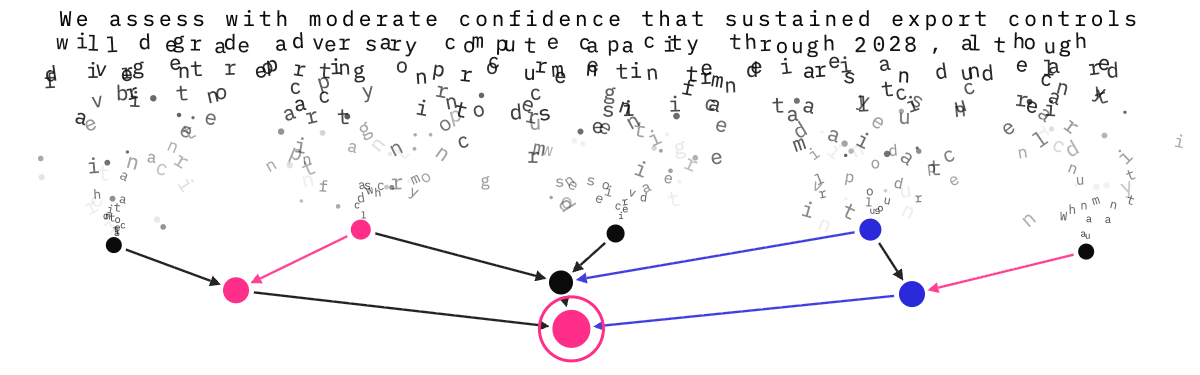
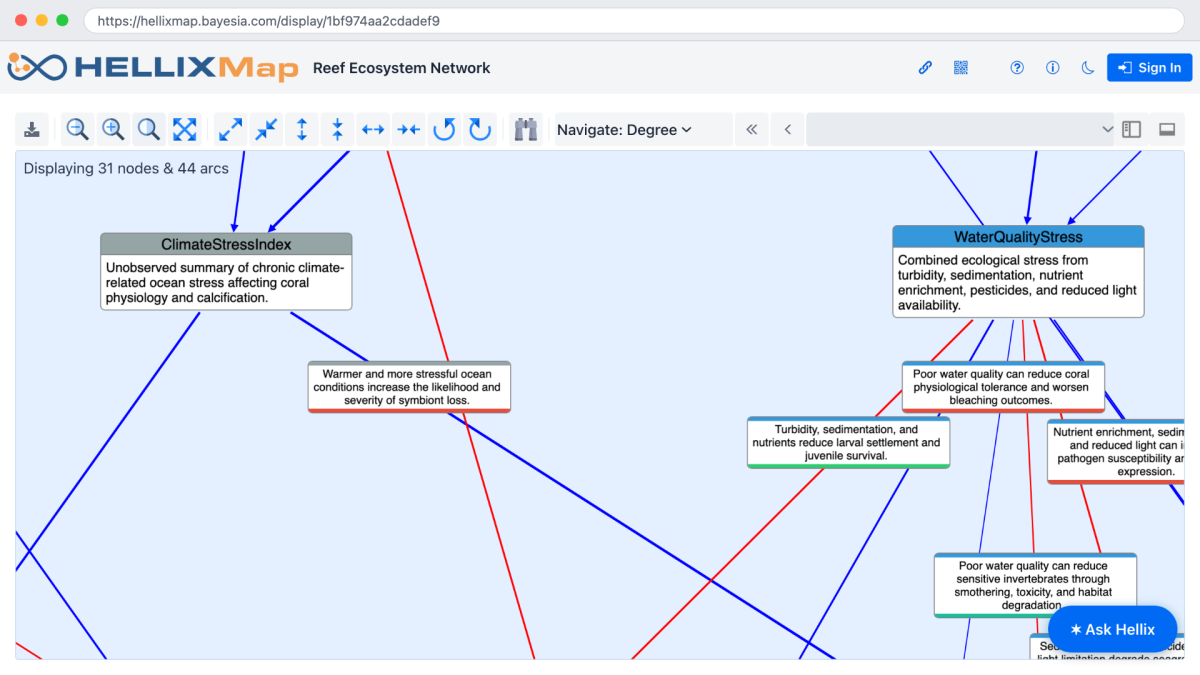
We demonstrate the full transformation in front of you. BayesiaLab’s built-in generative AI functions convert documents, narratives, and prompts into fully quantified causal models. On the resulting model we enter evidence, simulate interventions, and compute the value of additional information before acting, with every number traceable to an assumption someone can defend or correct. The model itself is the record of reasoning, built once, in the open. The result is a combination stronger than either part: the breadth of generative AI joined with the rigor of causal calculation, and you in command of both.
Venue
The seminar takes place at the ADGM Academy, 21st Floor, Al Maqam Tower, ADGM Square, Al Maryah Island, Abu Dhabi, United Arab Emirates.
About the Presenter
Stefan Conrady
Stefan Conrady has over 20 years of experience in decision analysis, analytics, market research, and product strategy, having worked with Mercedes-Benz, BMW Group, Rolls-Royce Motor Cars, and Nissan across North America, Europe, and Asia. As Managing Partner of Bayesia USA and Bayesia Singapore, he is widely recognized as a thought leader in applying Bayesian networks to research, analytics, and decision-making. Together with his business partner, Dr. Lionel Jouffe, he co-authored Bayesian Networks & BayesiaLab — A Practical Introduction for Researchers, an influential resource now widely cited in academic literature. With their deep expertise in Bayesian networks for Key Driver Analysis and Optimization, Stefan and Lionel are highly sought-after consultants, advising global leaders such as Procter & Gamble, Coca-Cola, UnitedHealth Group, L’Oréal, the World Bank, and many of the world’s largest market research firms.
Register Now (Free)