
Herman Melville: Moby Dick (1851)
Multi-Part Analysis of “Moby Dick” Using Hellixia
This example uses Hellixia to analyze Herman Melville’s Moby Dick through several complementary workflows. The analysis includes graphical representations generated from LLM knowledge, semantic networks created from elicited dimensions and embeddings, and targeted analysis of selected passages.
The workflows examine characters, themes, narrative structure, symbolic concepts, and selected textual excerpts. The goal is to compare different Hellixia functions and show how their outputs can be reviewed in BayesiaLab.
The analysis is organized in three phases:
We begin by harnessing Hellixia’s ability to generate graphs solely from the book’s title. This phase will produce:
Illustrate the progression and sequence of key concepts in Moby Dick.
Outlines the key factors contributing to a successful narration of the novel.
Next, we’ll combine LLM knowledge with embeddings to create semantic networks. These networks will be built around a carefully curated set of keywords designed to capture the most significant dimensions of the book.
Finally, we analyze specific passages of Moby Dick directly, combining the source text with the knowledge embedded in the selected LLM.
LLM-Powered Graphical Representations
The first step identifies fundamental elements in Moby Dick. We begin with a low-complexity representation and then increase the complexity to compare the resulting structures.
To achieve this, we will employ various completion models and adjust complexity settings, generating multiple graphical representations. This process will demonstrate the non-deterministic nature of these models, emphasizing that no single analysis is definitive. Just as asking different human assistants can yield varied perspectives, each model offers a unique interpretation.
This approach highlights the crucial role of subject matter experts, who must carefully select, refine, and validate the generated models to ensure accuracy and relevance. By illustrating this process, we underscore the importance of human oversight in leveraging LLM-powered tools for analysis.
Semantic Flowchart - Default Settings
We present here a method for developing a Semantic Flowchart by directly leveraging the knowledge embedded in LLMs.
Create a node titled .
After selecting this node, use Hellixia’s Semantic Flowchart Generator feature.
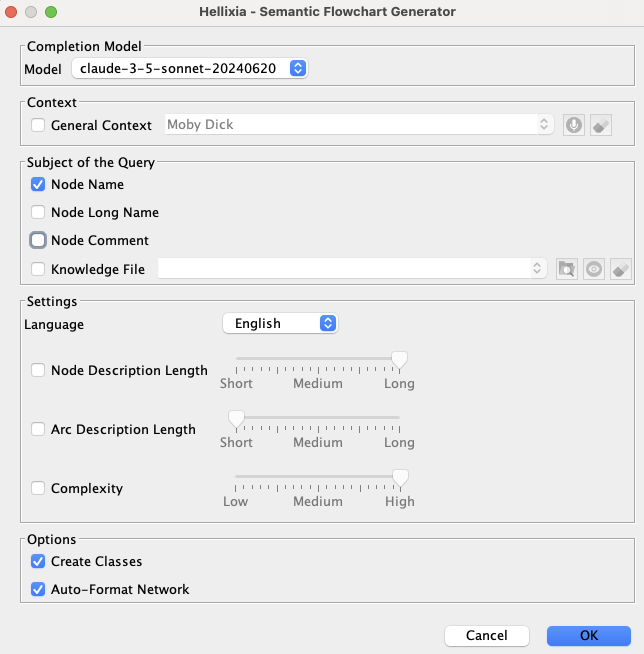
Configure the settings with Claude 3.5 Sonnet as shown in the screenshot below:
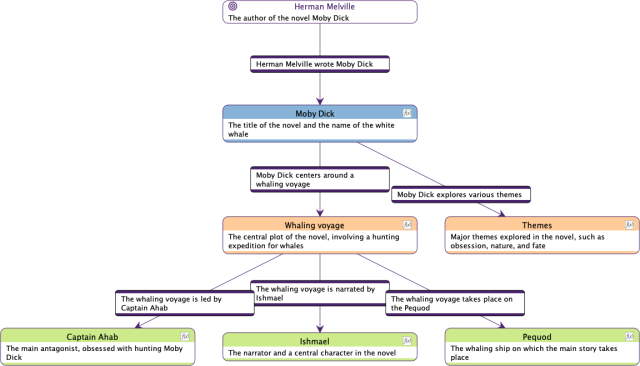
As a result, the LLM-powered process generates the following Semantic Flowchart:
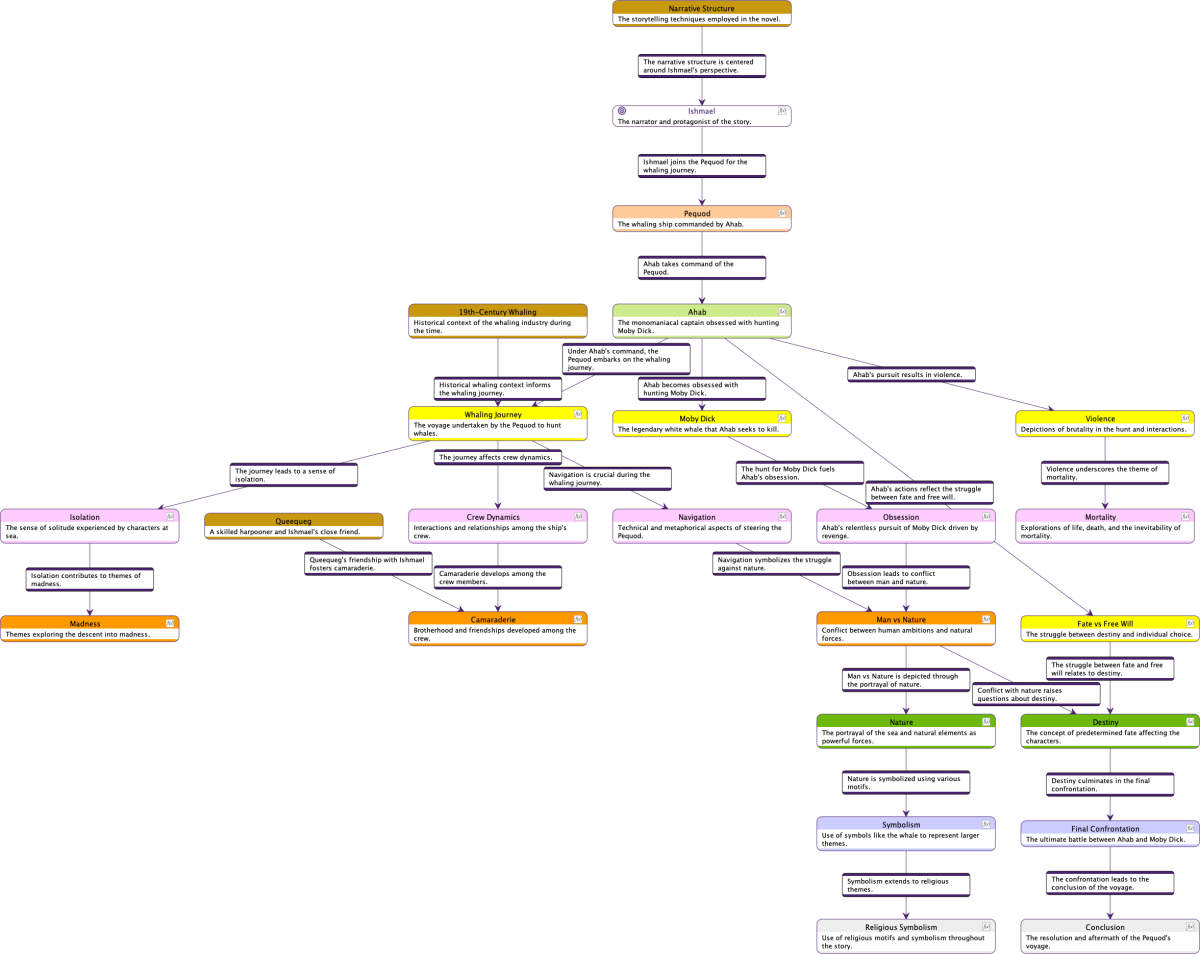
Employing the same analytical process, but utilizing the OpenAI o1-mini completion model instead of Claude, we generated the following Semantic Flowchart:
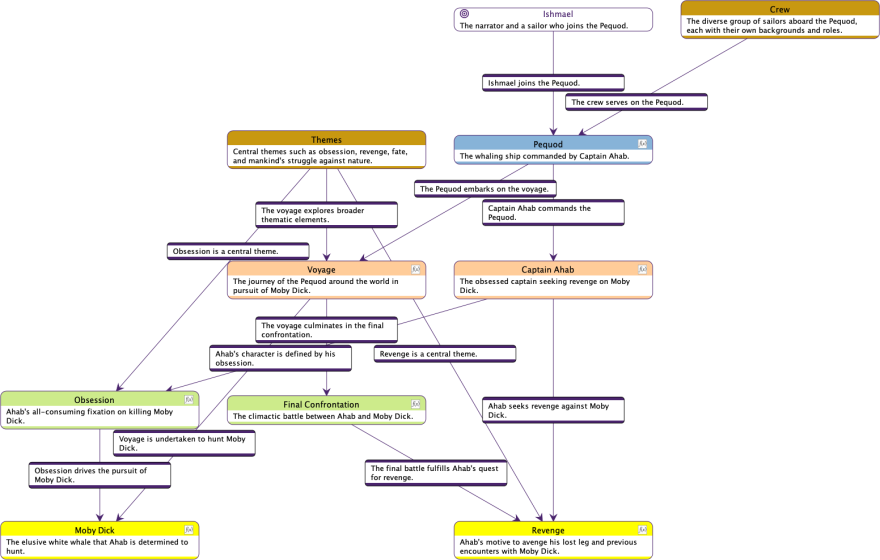
Comparing the two Semantic Flowcharts, we notice that the one generated by the OpenAI o1-mini model offers a somewhat more granular view of the book’s concepts.
It’s important to note that:
Even if we were to reapply the same process with identical prompts and completion models, we would likely obtain slightly different models.
This variability occurs due to the inherently stochastic nature of LLMs.
Importantly, this variation persists even when the temperature is set to 0 in Hellixia.
This inherent variability in LLM outputs underscores the importance of multiple runs and expert interpretation in AI-assisted analysis. It also highlights why a single output should not be treated as definitive, but rather as one perspective in a range of possible interpretations.
Semantic Flowchart - High Complexity
Advancing our analysis, we now adjust the complexity slider to its maximum value (as illustrated below) while continuing to use the OpenAI o1-mini model.
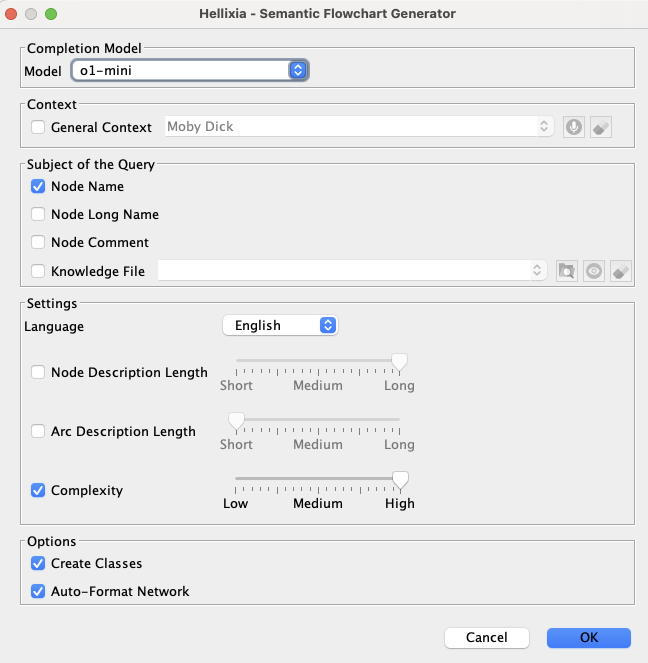
This configuration yielded the following, more intricate Semantic Flowchart:
Below is the Semantic Flowchart generated using Claude 3.5 Sonnet model with the same settings:
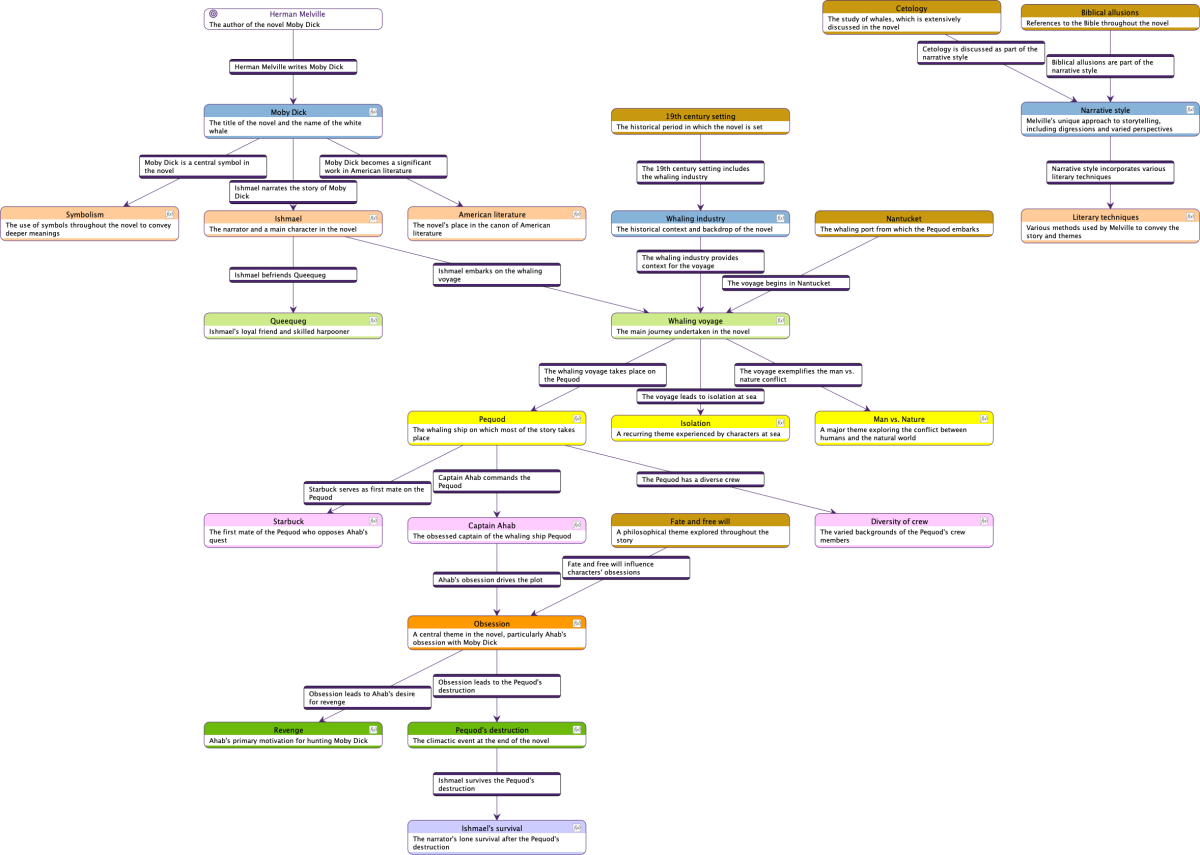
Likely due to the high complexity setting we applied, this flowchart consists of two distinct parts, with the second graph positioned in the upper right corner.
Causal Network
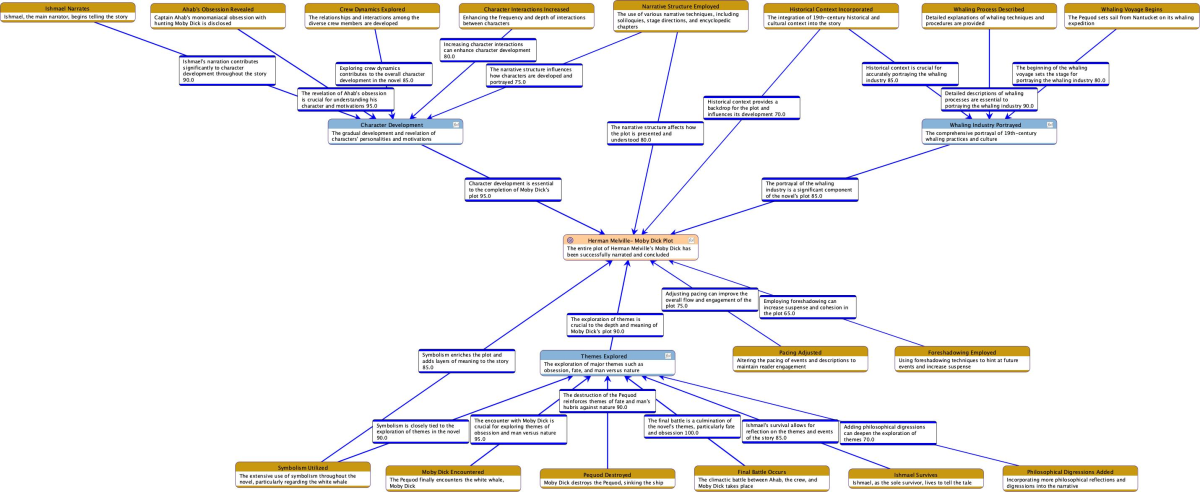
We now continue the analysis with Hellixia’s Automatic Causal Network Generator. For this step, we use “Herman Melville - Moby Dick Plot” as the input question (see the dialog below).
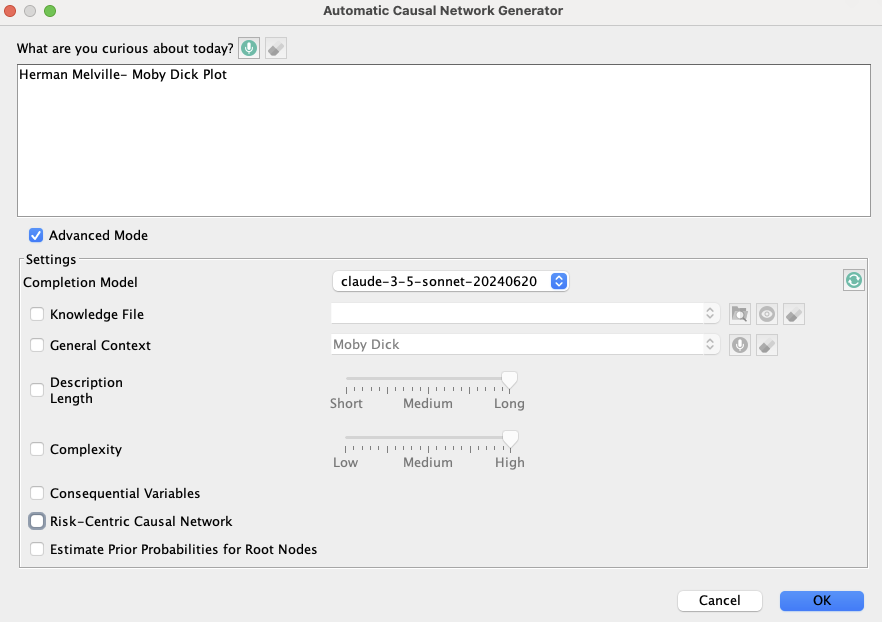
Hellixia then generates a Causal Graph, which outlines the key factors that contribute to crafting a successful narration of Moby Dick.
Semantic Network Analysis: Combining LLM Knowledge with Embeddings
We now extend the study of Moby Dick by integrating two computational approaches:
Embeddings
Embeddings are numerical representations of tokens, words, or sentences that capture their meanings based on context. For tokens and words, embeddings map linguistic units to vectors, allowing the model to understand similarities and differences. Sentence embeddings extend this concept, representing entire phrases or sentences as vectors, enabling models to grasp contextual meaning and relationships in larger textual structures. These embeddings allow machines to process and compare language efficiently across various tasks.
This integrated approach enables us to learn semantic networks, offering an alternative perspective for understanding the novel’s complex structure and themes.
Methodology
Our semantic networks are structured around a carefully curated set of keywords. These keywords are specifically selected to capture the most significant dimensions of Moby Dick.
Benefits
This method enables:
This approach identifies additional dimensions that were not represented in the previous analyses.
Characters Analysis
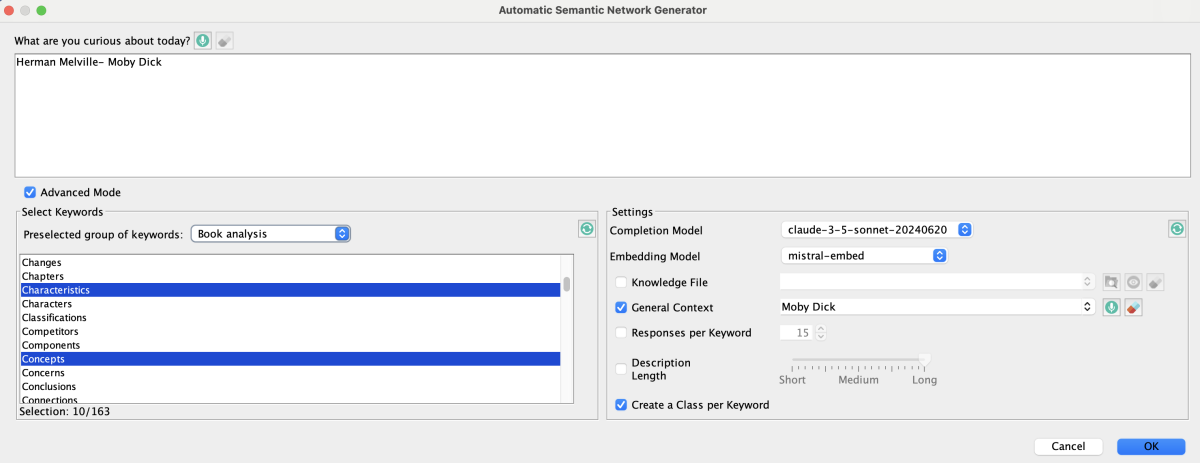
We begin our semantic network analysis by focusing on the main characters. For this, we utilize Hellixia’s Automatic Semantic Network Generator, specifically using its Advanced Mode to select Characters as the focal point from the 163 available keywords.
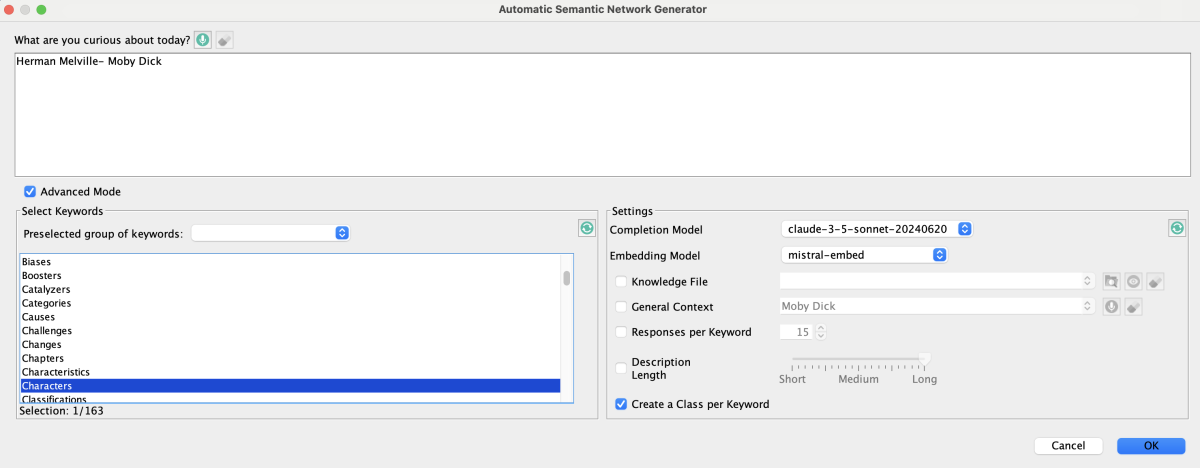
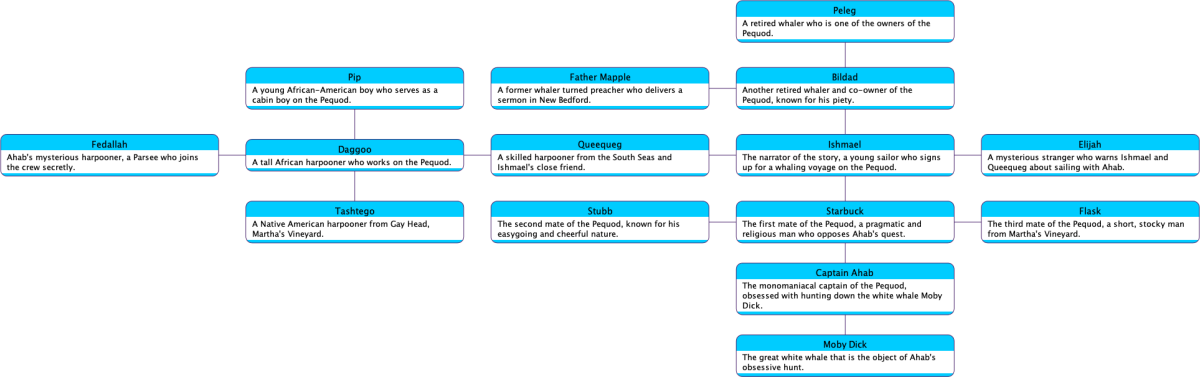
This semantic network, generated using the Maximum Weight Spanning Tree algorithm, represents the strongest correlations between the semantics associated with the characters’ names and their descriptions.
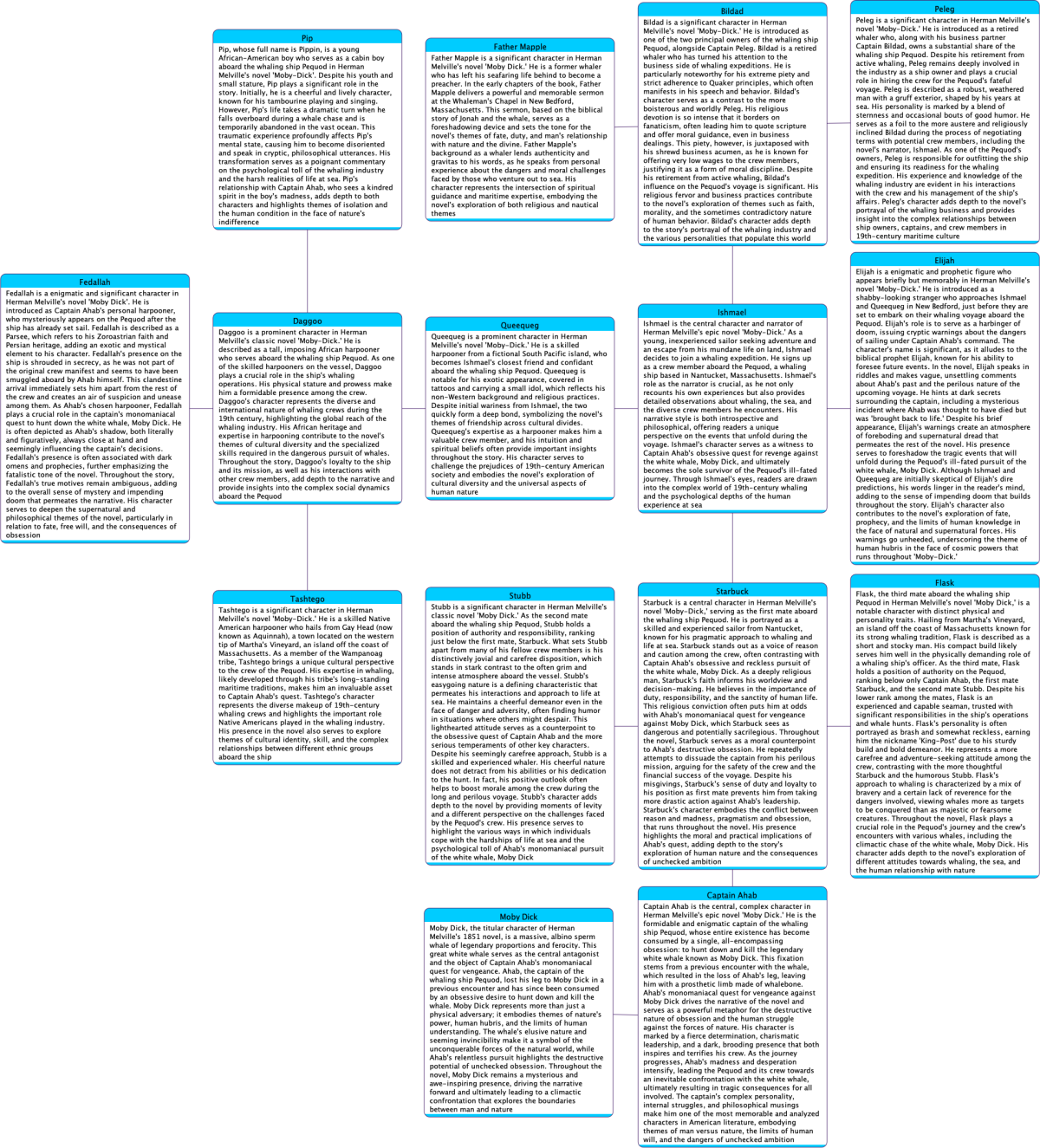
Comment Development
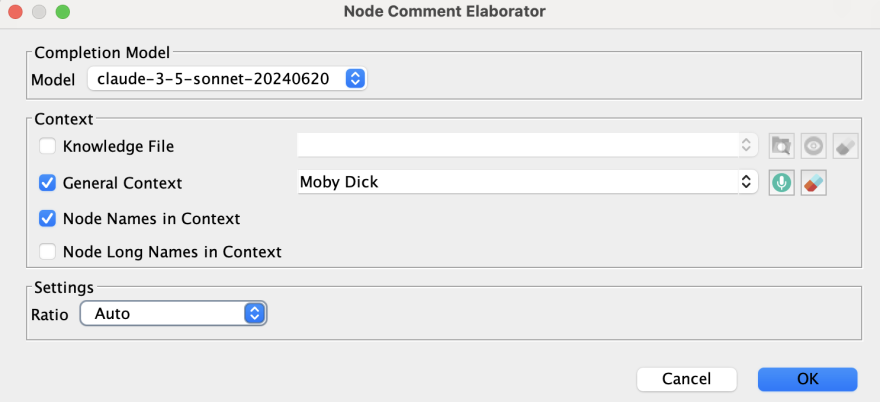
To add more detail to the character analysis, we use Hellixia’s features for developing or summarizing comments associated with selected nodes (accessible via Node Contextual Menu > Properties > Comments). These functions let us expand comments when more context is needed or condense them when shorter descriptions are preferable.
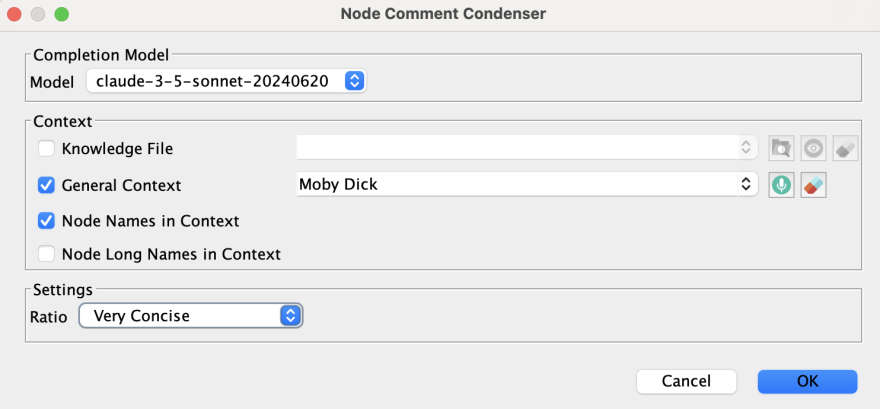
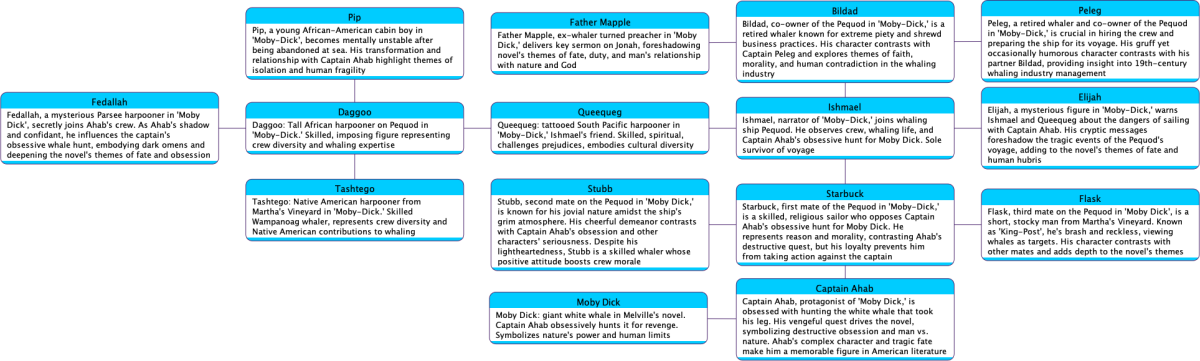
If we want a more concise overview, we can, of course, summarize the elaboration generated previously.
Weight of the Characters
Now, suppose we want to assign a weight reflecting the importance of each character in the book. We can use the query “Herman Melville - Moby Dick (Add a weight in brackets from 0 to 100 to each node’s comments to reflect the importance of that dimension)” to achieve this.
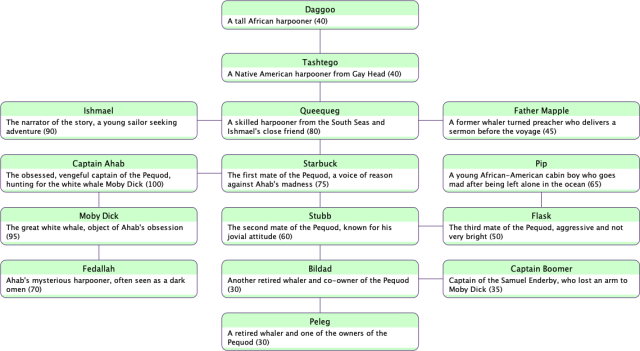
Once again, we observe the non-determinism of LLMs. Adding weights results in a slightly different list of characters.
Predefined Group: Book Analysis
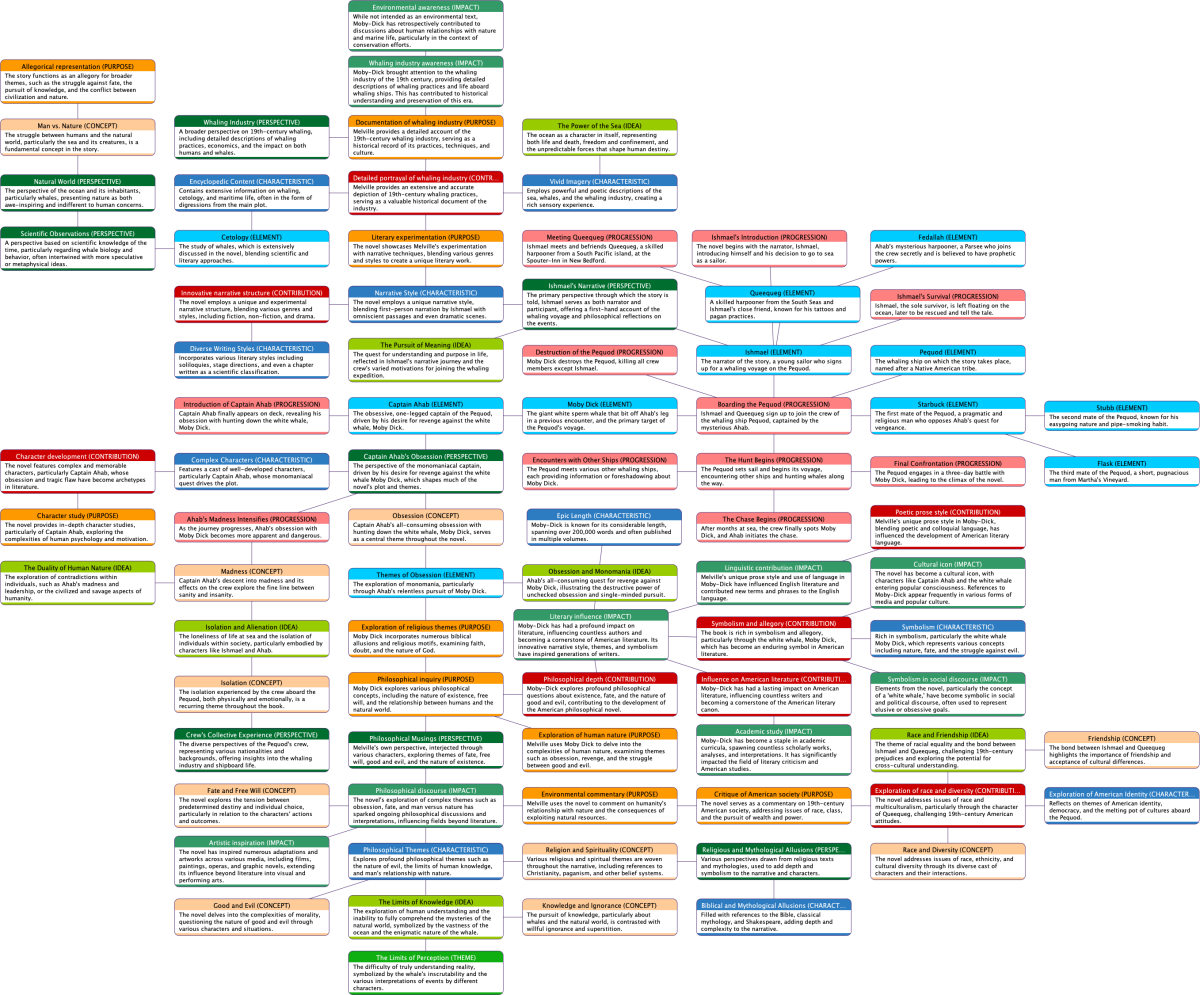
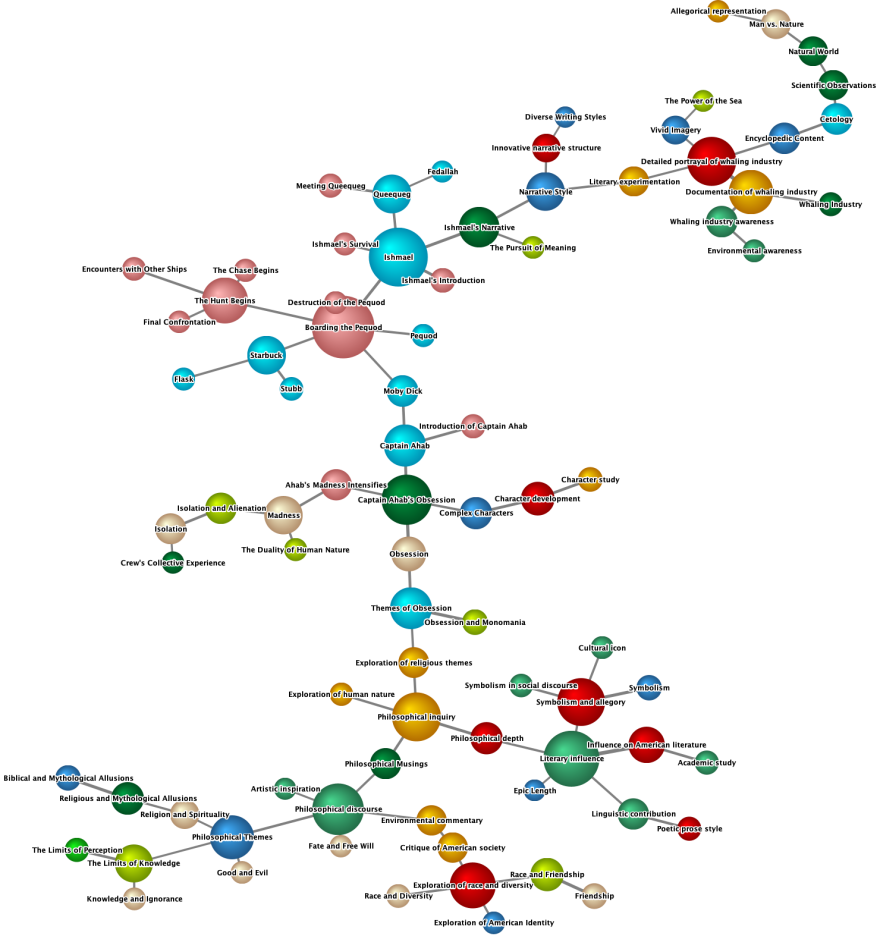
Let’s continue our analysis with the generation of a semantic network based on the predefined group Book Analysis, composed of the following 10 carefully selected keywords designed to capture the most important dimensions of books:
Node Force Analysis
Below, we have the same semantic network, but represented with the mapping of the Node Force Analysis.
Variable Clustering
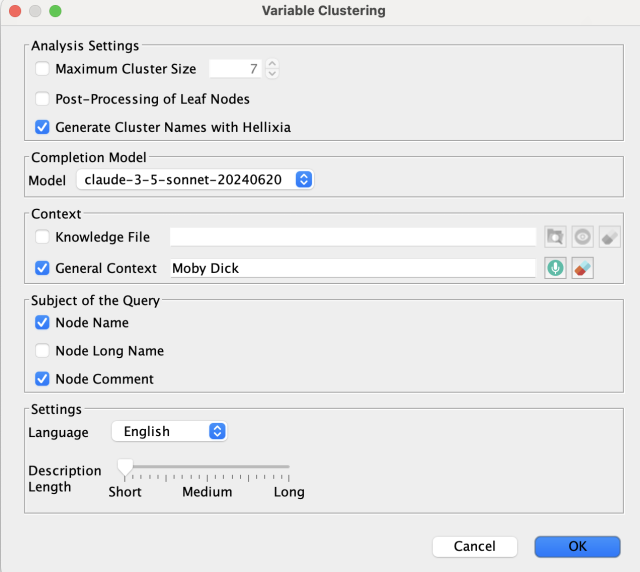
We now conclude this semantic network analysis part by using BayesiaLab’s Variable Clustering algorithm to create groups of variables that are strongly correlated. We use the settings below, where we use Hellixia to automatically create a name for each cluster of variables, based on the variables belonging to the cluster.
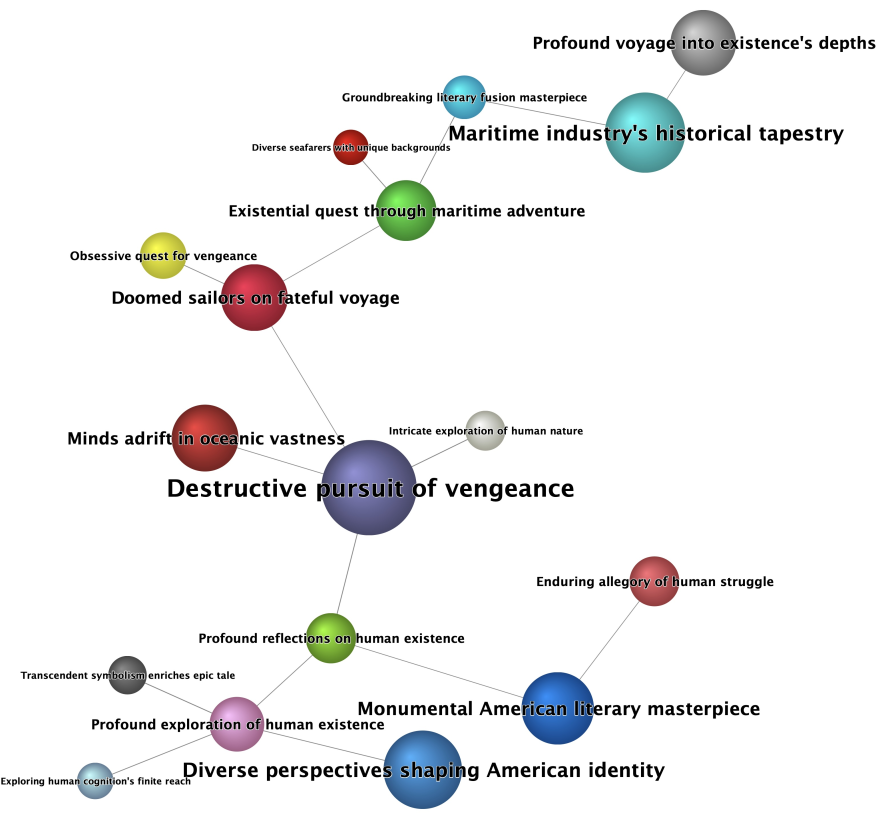
This graph can be seen as a macroscopic view of the previous node force mapping.
Textual Analysis
The final part of this analysis of Moby Dick consists of using Hellixia to analyze specific excerpts from the text. We will begin with a simple paragraph and then proceed to a more in-depth analysis of Chapter 9 (The Sermon) and 42 (The Whiteness of the Whale).
Key Passage Analysis from Chapter 132
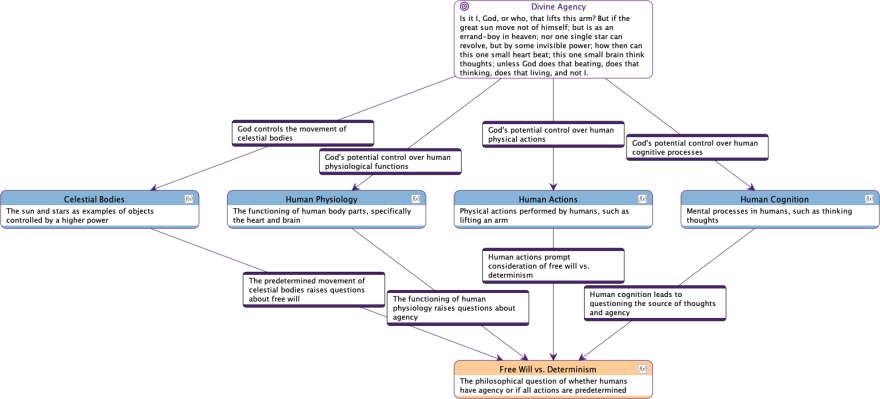
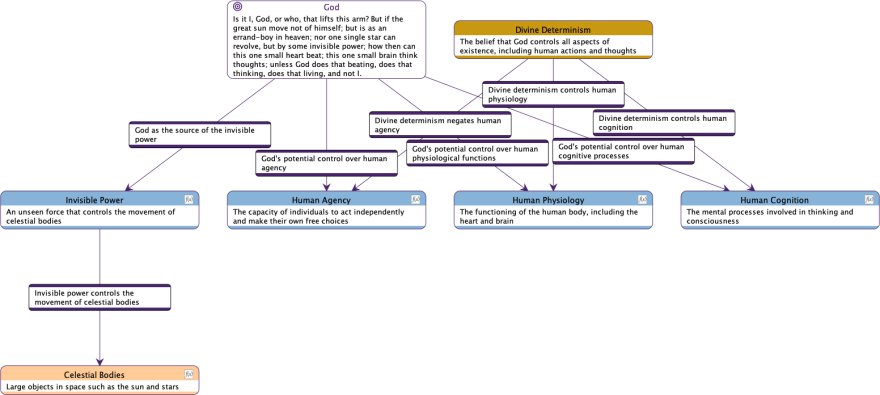
Is it I, God, or who, that lifts this arm? But if the great sun move not of himself; but is as an errand-boy in heaven; nor one single star can revolve, but by some invisible power; how then can this one small heart beat; this one small brain think thoughts; unless God does that beating, does that thinking, does that living, and not I.
We begin by creating a node in a new graph and pasting the selected paragraph into the comment section of the node. Once the node is selected, we utilize Hellixia’s Semantic Flowchart Generator feature. The settings are configured using Claude 3.5 Sonnet, as demonstrated in the screenshot below:
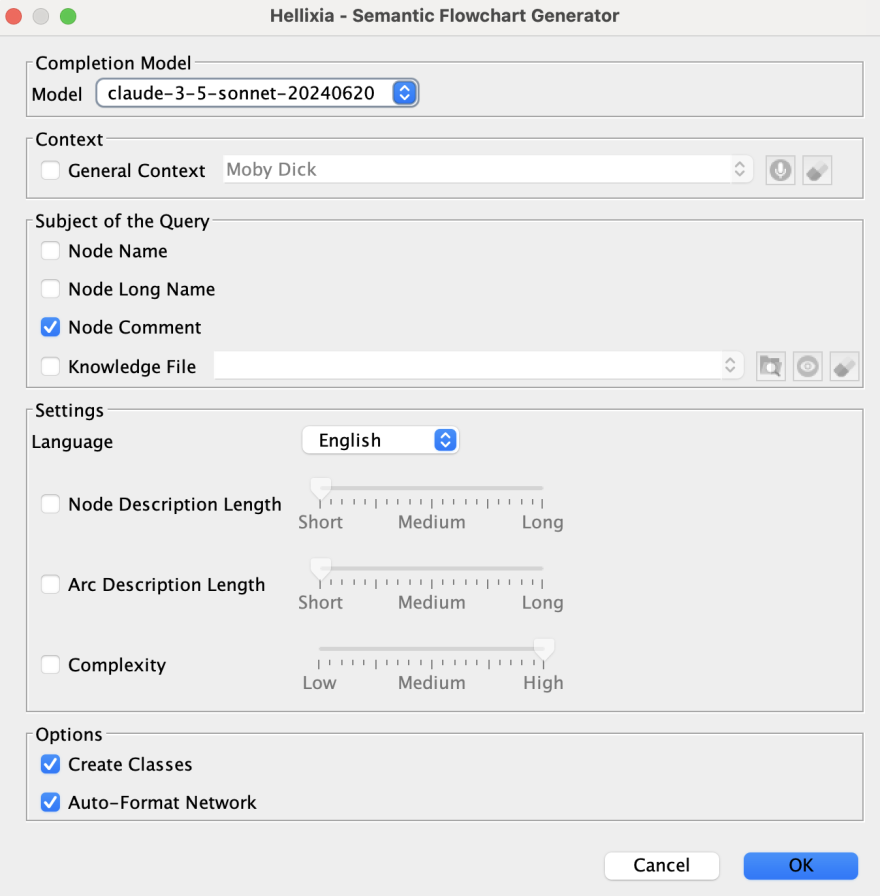
As a result, the LLM-powered process generates the following Semantic Flowchart:
We also utilize this paragraph to demonstrate the Causal Semantic Diagram feature, which focuses on representing the cause-and-effect relationships between key concepts:
Analysis of Chapter 9 - The Sermon
Now, instead of focusing on just a paragraph, we will expand our analysis to cover an entire chapter, The Sermon.
We begin by copying the entire chapter into a text file, which will serve as a knowledge file for analysis. Next, we utilize the Document Analysis > Semantic Flowchart Generator feature, applying the parameters listed below:
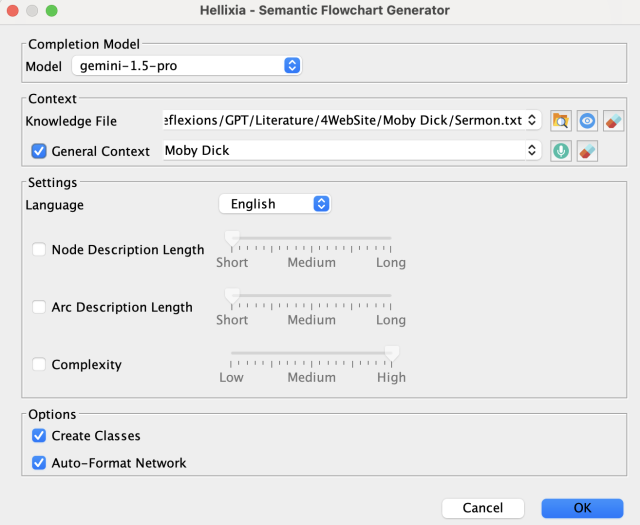
This method automatically generates Semantic Flowcharts based on the content of Chapter 9, enabling a clear visualization and deeper understanding of its key concepts.
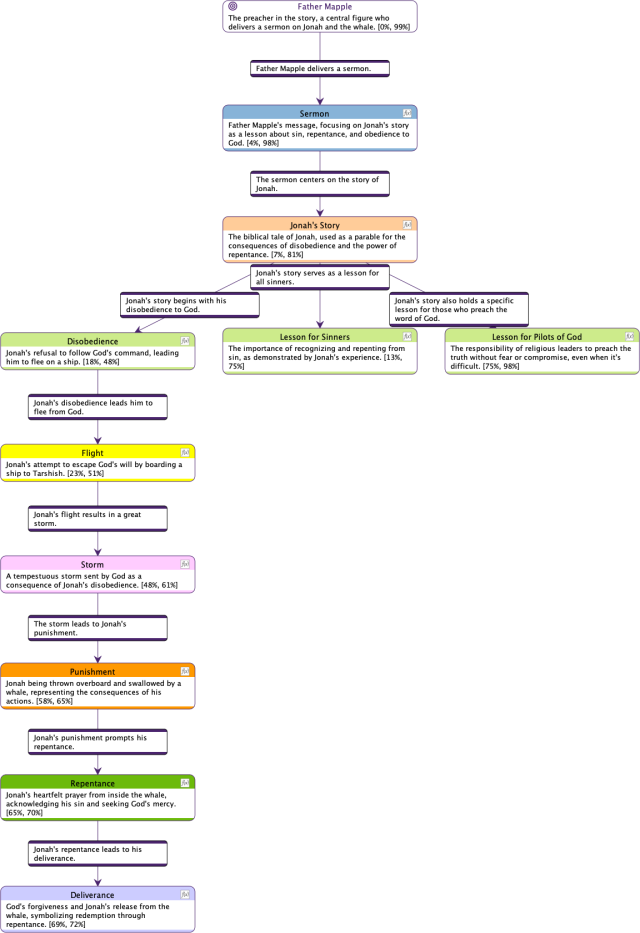
The percentages indicated in the comments of the nodes represent the approximate location of the concepts within the knowledge file. This feature allows for a visualization of the distribution of key ideas throughout the analyzed text.
Analysis of Chapter 42 - The Whiteness of The Whale
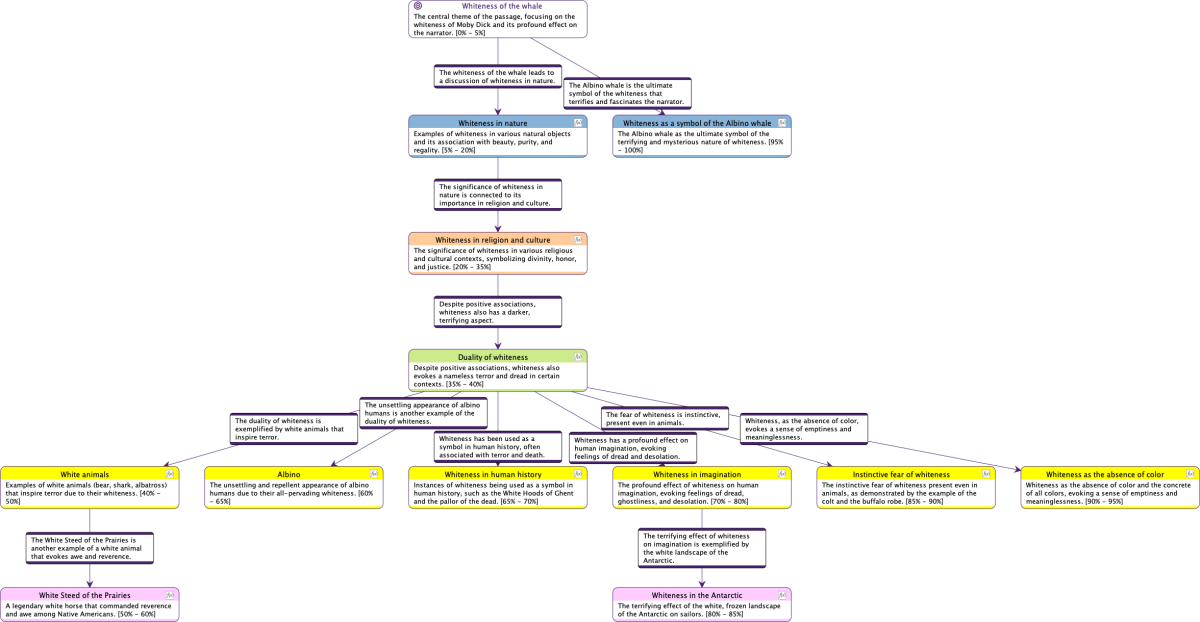
We conclude this analysis with Chapter 42: The Whiteness of The Whale.
Following the same workflow used for Chapter 9, we generate the flowchart, this time using Claude 3 Opus instead of Gemini 1.5 Pro.

Finally, we create one last flowchart, adjusting the complexity to Medium to generate a slightly more detailed representation.
Conclusion
In conclusion, our analysis of Moby Dick using Hellixia’s advanced features demonstrates the power of modern tools in deepening our understanding of literary works.
From the creation of semantic flowcharts to the exploration of causal relationships, Hellixia enables a fresh and structured perspective on Melville’s narrative.
Learning semantic networks from dimensions extracted with selected keywords identifies additional dimensions of the novel.
Finally, Hellixia can analyze specific excerpts of the book by creating flowcharts or causal semantic diagrams.