
Bayesia
Experts. Data. GenAI.
Bayesia Ecosystem
One Bayesian foundation. Two product families.
Bayesia brings together expert knowledge, empirical data, and generative AI to create transparent models for reasoning under uncertainty. At the core is an integrated platform for eliciting, learning, modeling, visualizing, deploying, and integrating Bayesian intelligence. Alongside it, Bayesia offers specialized standalone solutions for troubleshooting complex systems and building large-scale probabilistic digital twins.
BayesiaLab
BayesiaLab is the flagship environment of the Bayesia ecosystem. It gives analysts, researchers, and domain experts one place to build Bayesian networks from expert knowledge, learn structure from data, run inference and simulation, perform causal analysis, and move toward operational decision support.

BayesiaLab
The core environment for knowledge modeling, machine learning, reasoning, and decision support. BayesiaLab is the flagship environment of the Bayesia ecosystem. It gives analysts, researchers, and domain experts one place to build Bayesian networks from expert knowledge, learn structure from data, run inference and simulation, perform causal analysis, and move toward operational decision support.
1 / 5
Start with a structure people can inspect. Build models directly as graphs of variables and relationships. BayesiaLab lets experts encode causal and probabilistic knowledge in a form that can be reviewed, challenged, refined, and computed.
Hellixia
The GenAI layer for turning language and documents into model-ready structure. Hellixia connects generative AI to formal modeling with Bayesian networks. It helps users move from prompts, documents, and unstructured narratives to semantic, causal, and probabilistic structures that can be explored, refined, and operationalized in BayesiaLab and HellixMap.

1 / 5
Start with a question, not a blank canvas. Hellixia can generate causal network structure from a prompt, including nodes, arcs, explanatory comments, and initial probabilistic scaffolding.
BEKEE
A structured web workflow for eliciting expert judgment when data are limited. BEKEE, the Bayesia Expert Knowledge Elicitation Environment, is designed for situations where expert judgment matters as much as, or more than, available data. It captures individual perspectives through structured web questionnaires, supports formal comparison of viewpoints, and compiles those views into a computable Bayesian network.

1 / 4
Organize the elicitation before the numbers are entered. Treat elicitation as a modeling workflow, not a loose workshop artifact. BEKEE gives facilitators a disciplined way to frame questions, gather judgments, and prepare model-ready inputs.
HellixMap
Browser-native graph exploration and publishing for semantic, causal, and probabilistic structures. HellixMap makes structured knowledge easier to navigate and share. It provides an interactive environment for exploring semantic networks, knowledge graphs, Bayesian networks, and causal Bayesian networks in the browser, with direct publishing paths from BayesiaLab and AI-assisted graph generation through Hellixia.

1 / 4
Publish complex graphs in a form that invites exploration. Turn models and knowledge graphs into interactive web experiences so teams, clients, and stakeholders can inspect structure directly instead of relying on static screenshots or slides.
WebSimulator
Interactive web deployment for guided scenario analysis and stakeholder-facing decision support. WebSimulator publishes BayesiaLab models as browser-based experiences for users who do not need the full modeling environment. It supports guided scenario analysis, live inference, and adaptive questionnaires, making Bayesian reasoning accessible to broader stakeholder groups.

1 / 4
Turn models into guided experiences for scenario analysis. Publish a model as an interactive web page with selected inputs and outputs so users can test assumptions and compare outcomes without opening BayesiaLab.
Bayesia Engine API
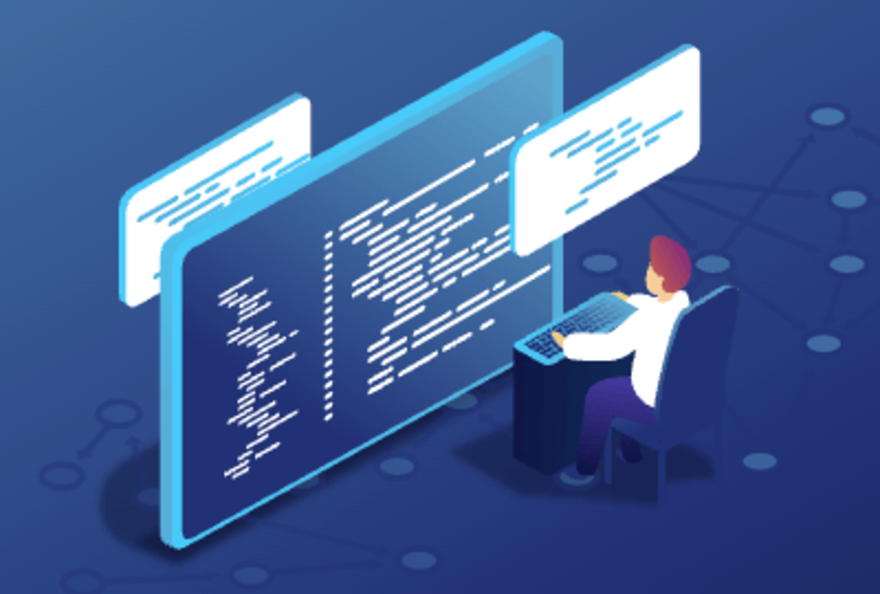
Programmatic inference, modeling, and learning for enterprise software and services. Bayesia Engine API is the programmatic bridge between Bayesia's modeling environment and production systems. It allows teams to embed inference in applications, automate repeatable workflows, and access modeling and learning capabilities through Java APIs or a REST-based inference service.
1 / 4
Bring Bayesian inference into your software stack. Use Bayesia Engine API to call model-based inference from your own applications and services, turning Bayesian reasoning into an operational capability.
BEST
A standalone troubleshooting suite for diagnosing and repairing complex heterogeneous systems. BEST, the Bayesian Expert System for Troubleshooting, is a standalone Bayesia solution for service organizations, maintenance teams, and technical support environments. It helps users reason from symptoms, failure modes, error codes, and tests toward likely causes and effective corrective actions.

1 / 4
Reason from symptoms to the most likely causes. BEST supports troubleshooting across complex mechanical, electrical, electronic, and software systems by combining symptoms, configurations, failure modes, and test results in one diagnostic framework.
BRICKS
A standalone framework for probabilistic relational modeling, risk-centric digital twins, and large-scale complex systems. BRICKS extends Bayesia's approach to systems that are too large, too repetitive, or too interconnected for one-off flat models. It provides a probabilistic relational modeling framework for reusable knowledge structures, instantiated system models, and risk-focused querying in complex environments.

1 / 4
Model recurring structures as reusable classes. BRICKS begins with a knowledge-modeling phase that creates a generic knowledge base of classes for complex systems with repeated objects, properties, and relationships.
Continue Exploring
Events, training, documentation, and starting points for going deeper. The Bayesia ecosystem extends beyond the product modules above. Use these entry points to evaluate capabilities, learn the workflow, stay current with new releases, and connect with the Bayesia community through events and training.

1 / 6
Find courses, seminars, webinars, and events in one place. Bayesia Academy gathers scheduled training, topical webinars, seminars, and event listings for teams building with Bayesian networks.